Redesigning the Brokerage Portfolio Page for a Wealthtech Platform
Restoring user trust in a redesigned portfolio page by going back to what worked
Client
Role
Lead Product Designer
Platforms
Mobile
The Problem
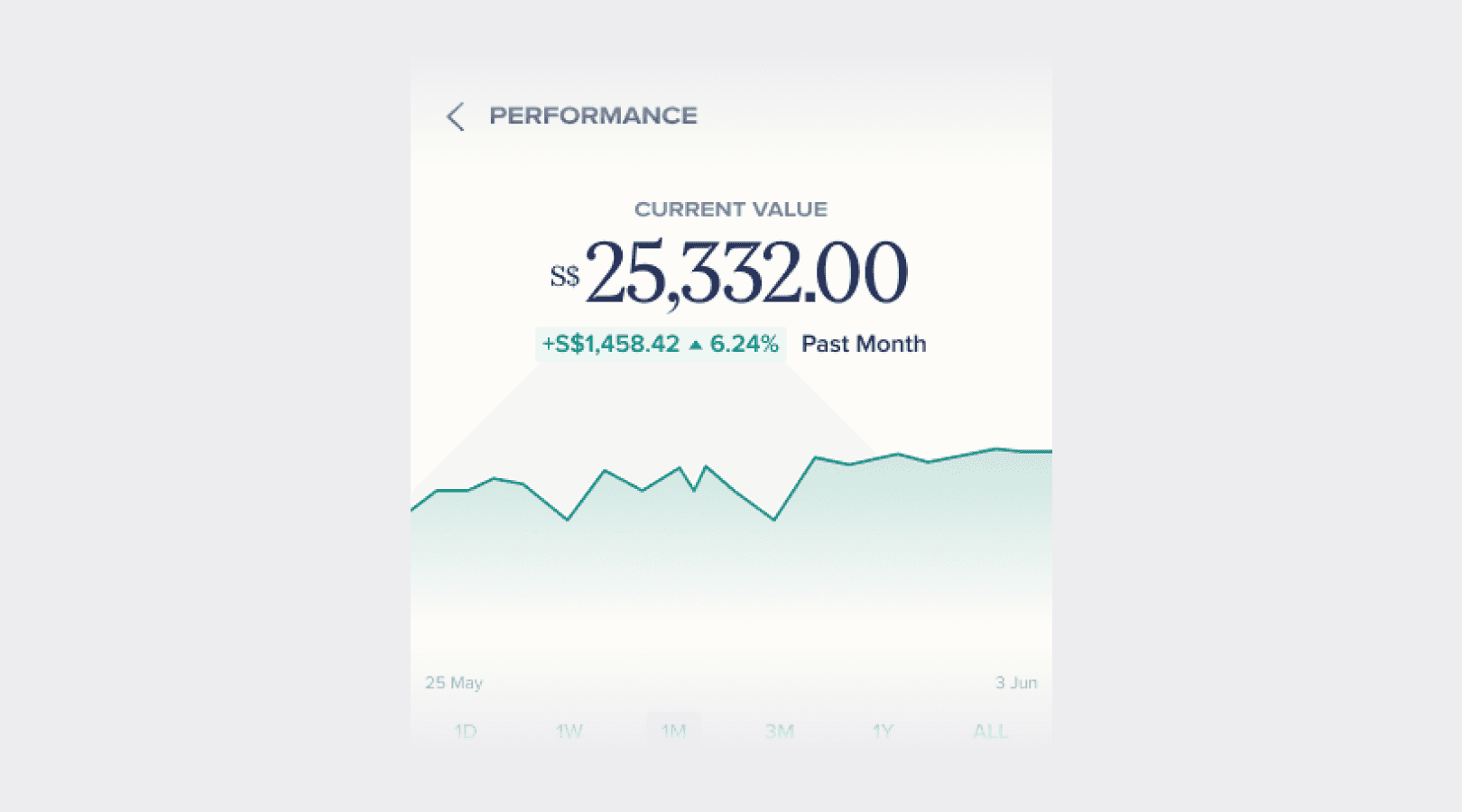
Syfe is a Singapore-based investment platform offering brokerage, managed portfolios, and wealth products. As part of a visual language refresh, the existing Performance page was replaced with a new Portfolio page built on the updated design system. The backlash was immediate, driven by three specific failures.
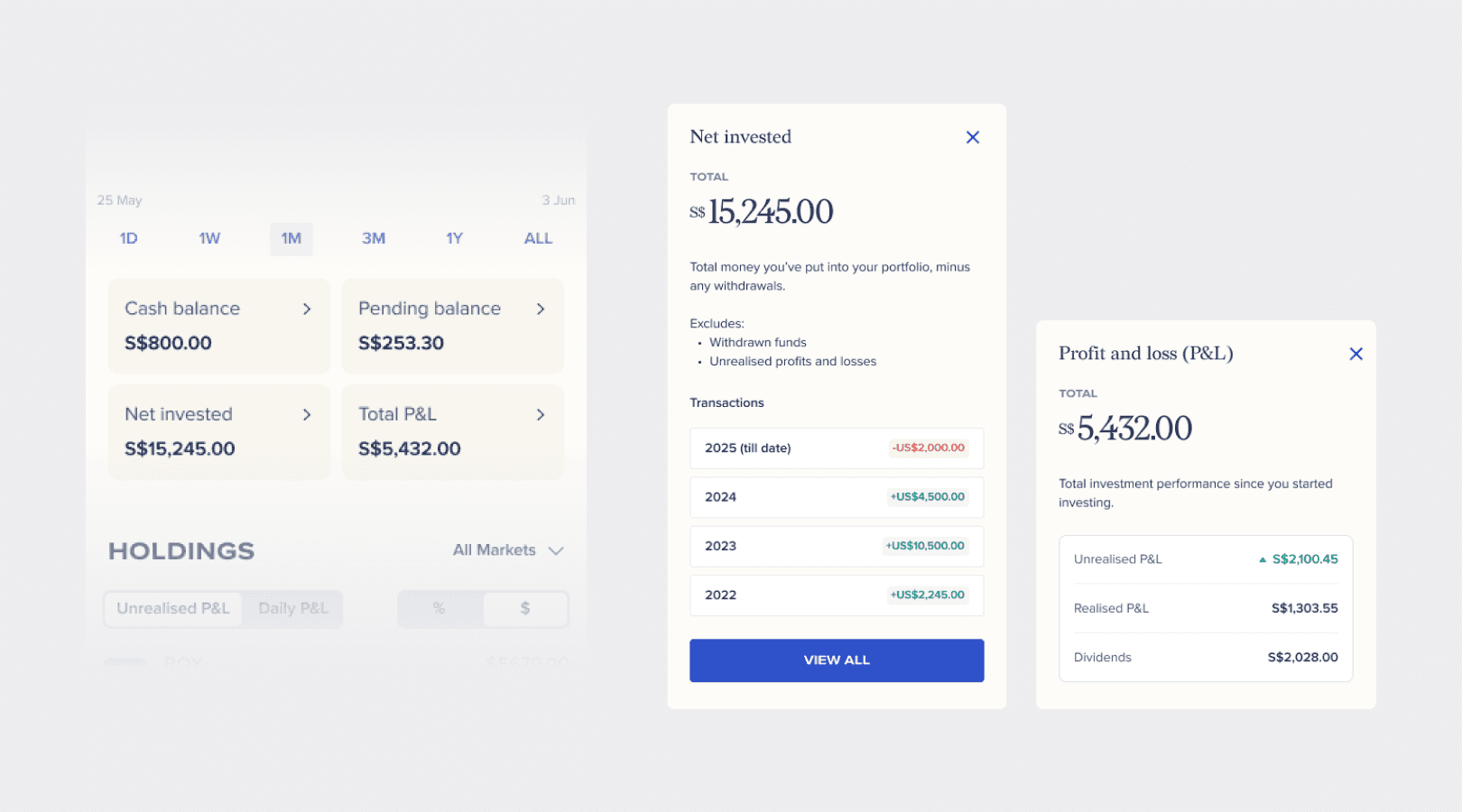
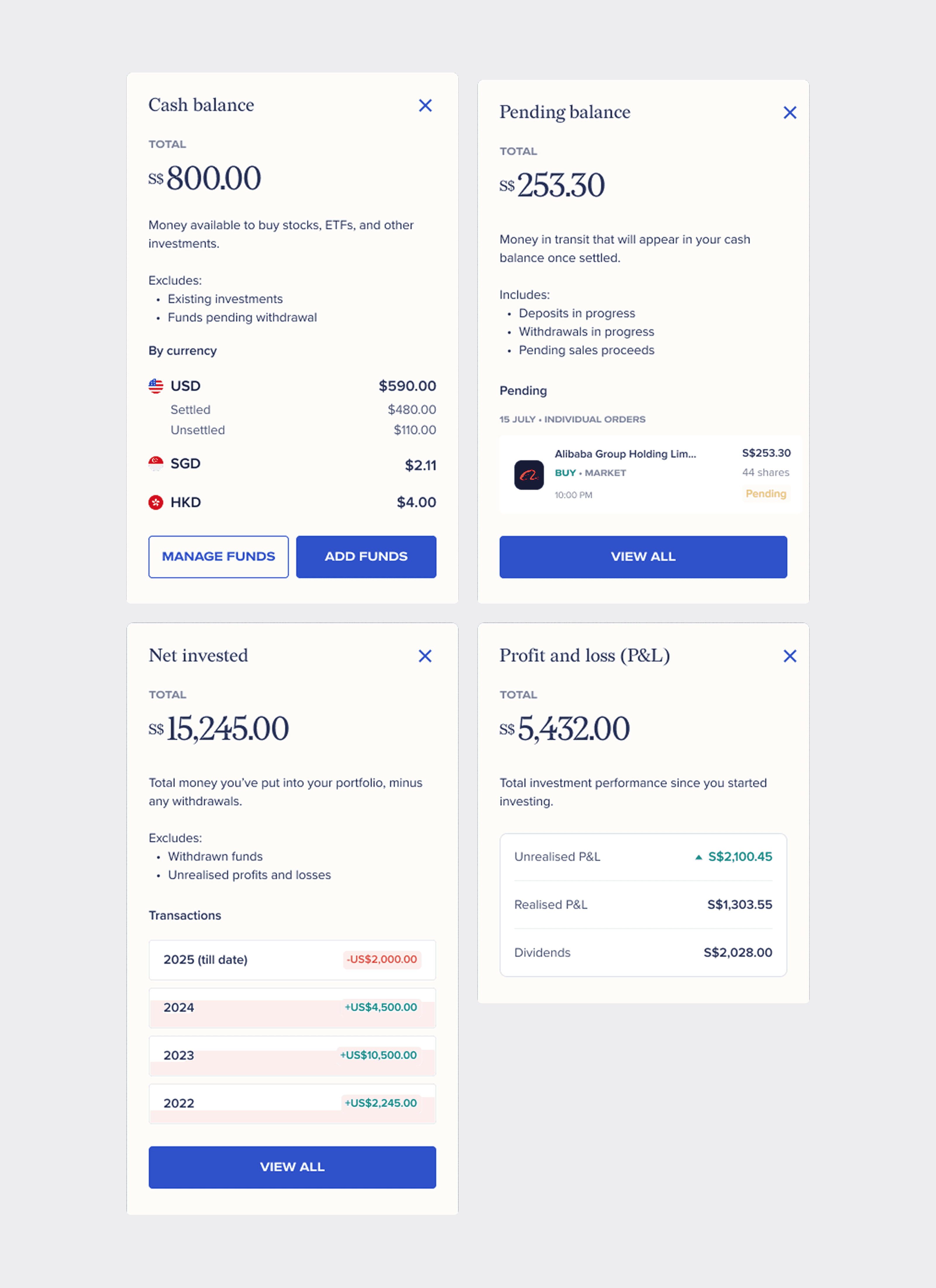
The graph showed only the period delta, not total portfolio value over time. Users could not tell whether their portfolio was growing. The Realised P&L metric bundled dividend income with proceeds from sold assets, confusing users who had not sold anything. A drastic shift in hierarchy, colour, and structure left long-time users unable to orient themselves on a page they used regularly.
The underlying problem was not aesthetic. It was a trust problem. Users rely on this page to make sense of their investments, and the redesign made that harder.
Key Design Decisions
Process
The starting point was a structured gap analysis comparing the old Performance page against the new Portfolio page, metric by metric and layout element by layout element. This established a clear picture of what users had lost, what was worth carrying forward from the refresh, and what needed to be introduced net-new.
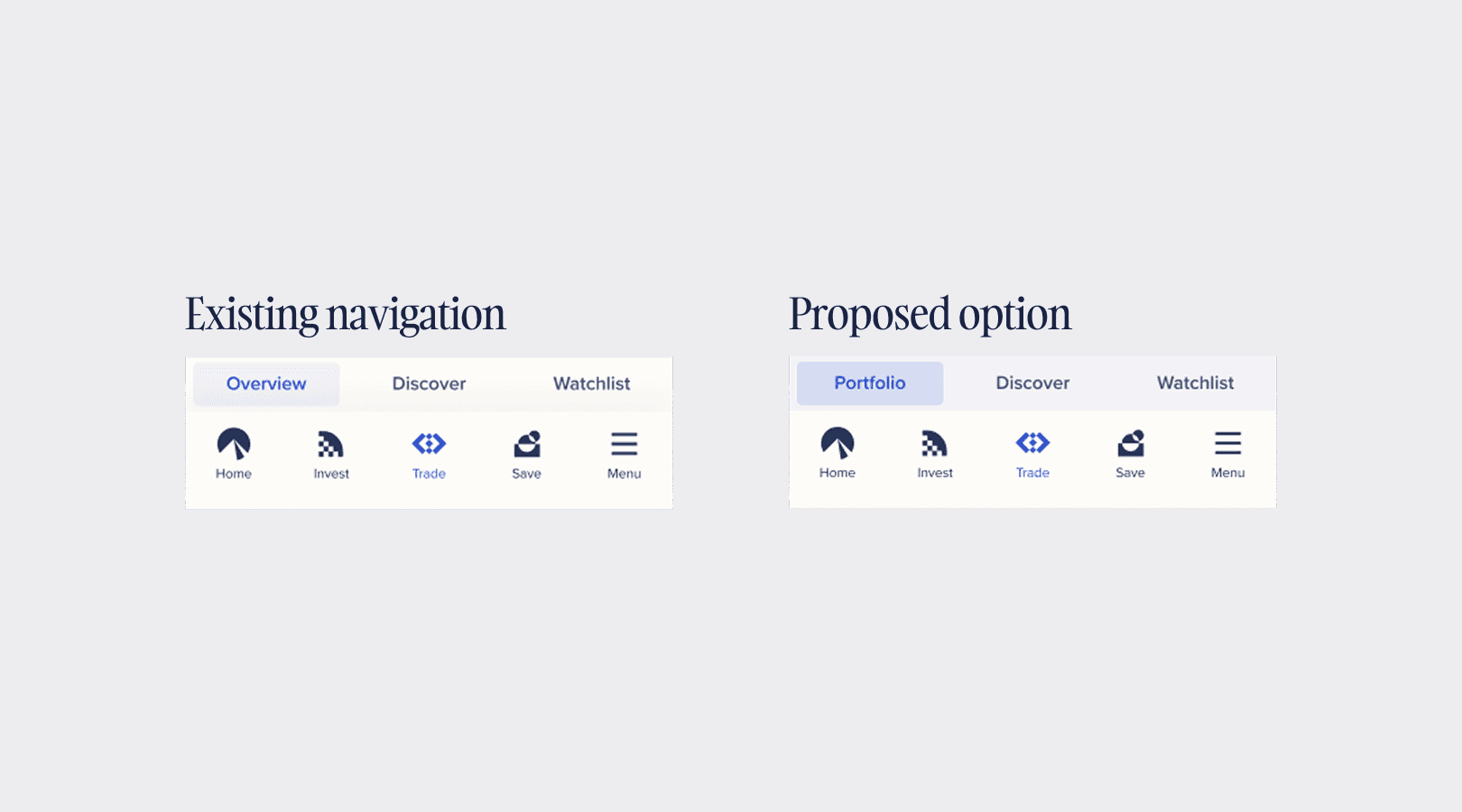
To validate design directions and pressure-test assumptions, I reviewed how leading brokerage and investment apps present portfolio performance, covering both international platforms and apps within the Singapore market. Key areas of focus were graph presentation, metric hierarchy, holdings layout, and navigation structure. The analysis reinforced the case for Portfolio-first navigation and informed the decision to show total portfolio value as the primary graph view. The IA was rebuilt using the Performance page as the structural base, with new metrics from the refresh mapped in at appropriate points in the hierarchy.
Iterations
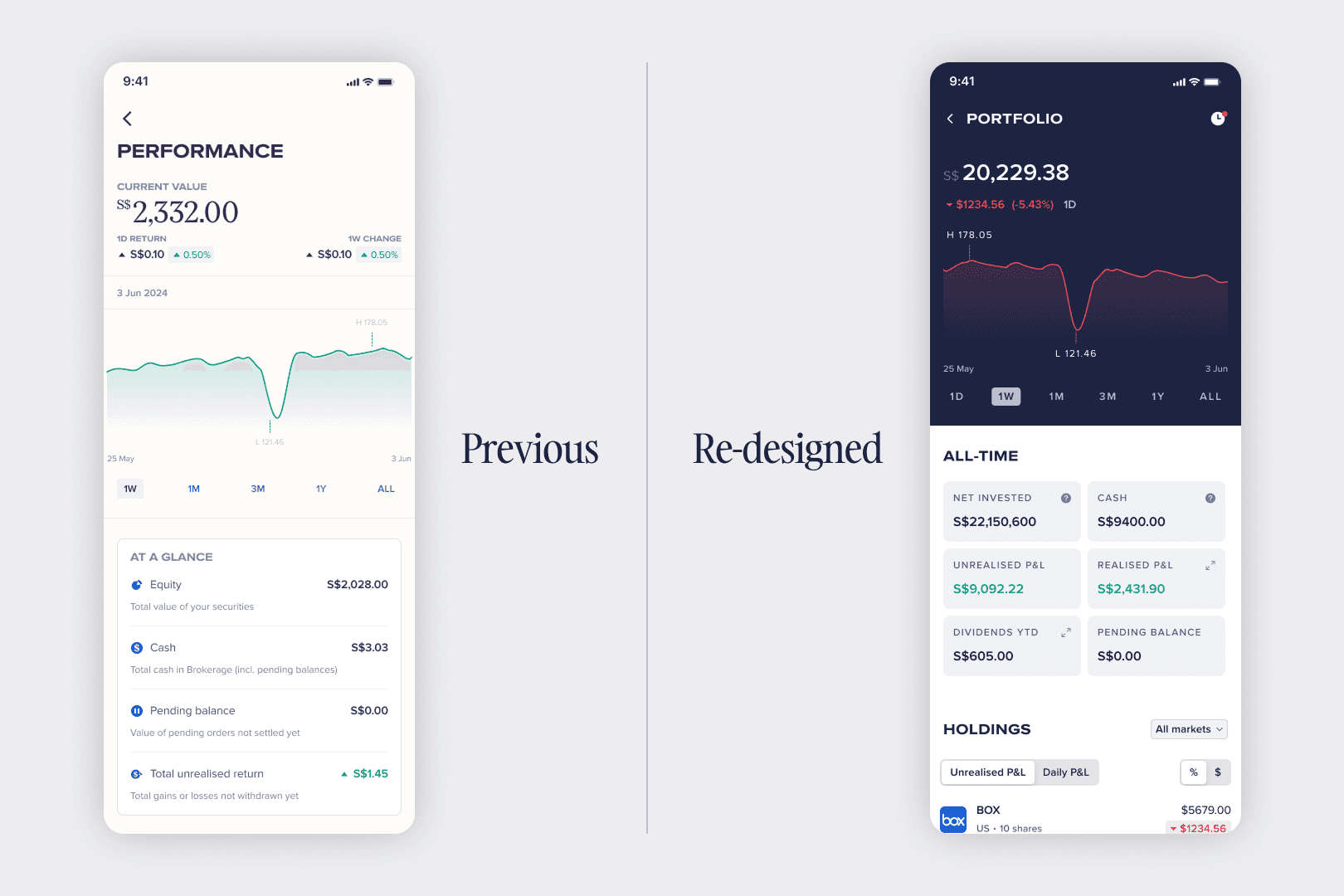
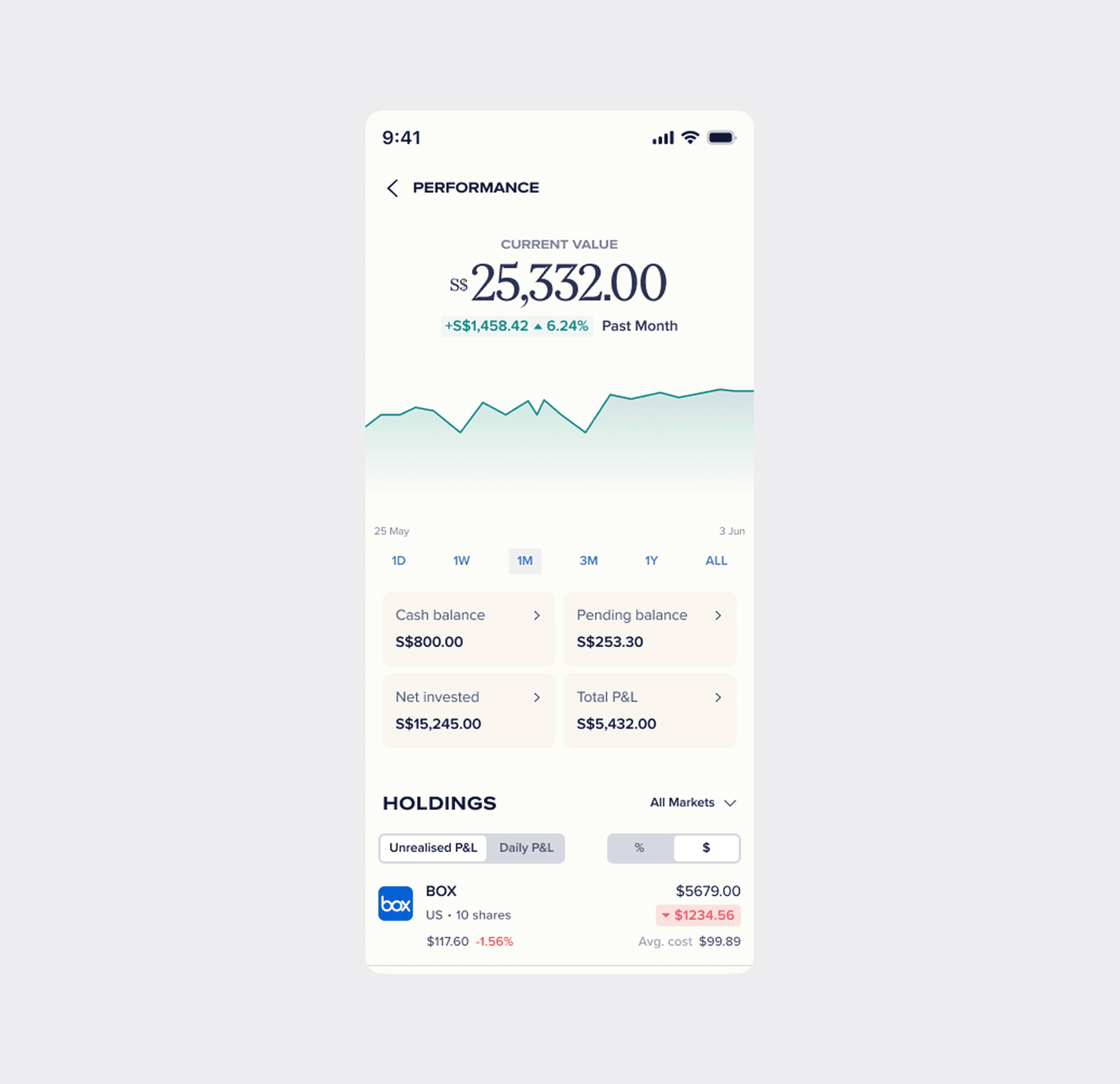
The bulk of the design work focused on three areas, each going through multiple feedback cycles: the graph format and what it should primarily communicate, the overview metric layout and how to present the Realised P&L clarification, and the holdings list structure. An early version of the graph retained the period delta as the primary view with portfolio value as secondary, but user feedback in internal reviews made clear that this was still the wrong hierarchy. The final version flipped it, with total portfolio value as the primary line and the period delta surfaced below as a supporting figure. The navigation restructure was also explored across several rounds of internal review before being deprioritised due to business constraints, with a formal proposal documented for a future phase.
Final Output
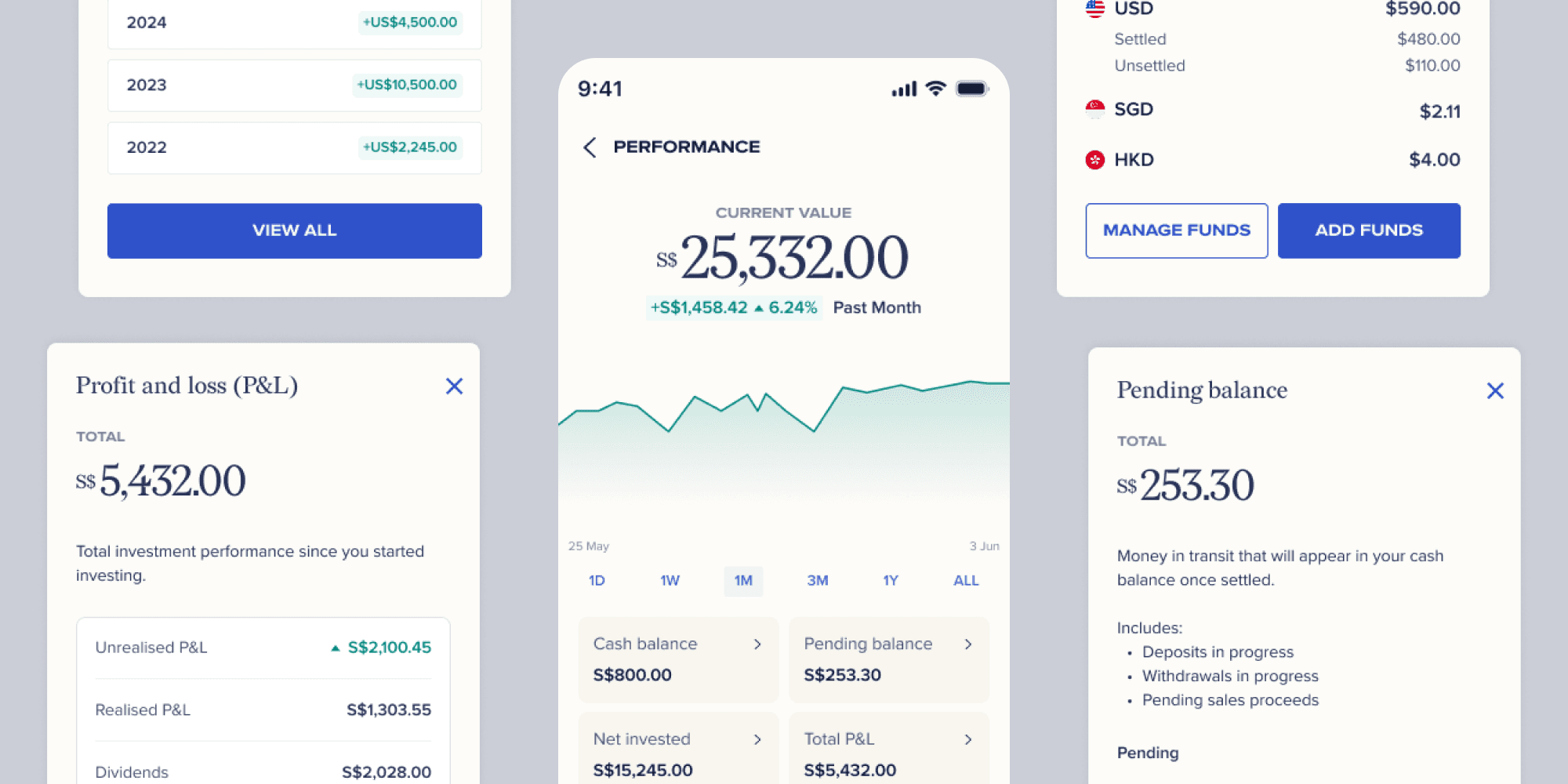
A redesigned Portfolio page for the Syfe Brokerage module on mobile, featuring a full portfolio value graph with time-frame switching, a separated and labelled Realised P&L breakdown, and a restored information hierarchy grounded in the familiar structure of the original Performance page. A Portfolio Analysis section and a navigation restructure were scoped and formally documented for a future phase.
Reflection
The most important lesson from this project was not about layout or metrics. It was about the cost of moving too far from a familiar experience without giving users the tools to reorient themselves. The original refresh introduced genuine improvements but underestimated how much users had internalised the old page. Change without continuity reads as confusion, not progress.
The navigation proposal is the unfinished thread. It was the right structural call, had stakeholder support, and was grounded in competitive evidence, but it arrived in the same conversation as a page redesign that needed to ship. Framing it earlier as a separate phased initiative might have given it a cleaner path forward without competing with a more urgent fix.
More Work
Cloud-based Network Management Platform
Creating a Getting Started Guide for Network Management SaaS
Cybersecurity SOC Tool Startup
Building the MVP of a Cybersecurity SOC Tool powered by Agentic AI
Cloud-based Network Management Platform
Designing a Dashboard for an IT Admin